
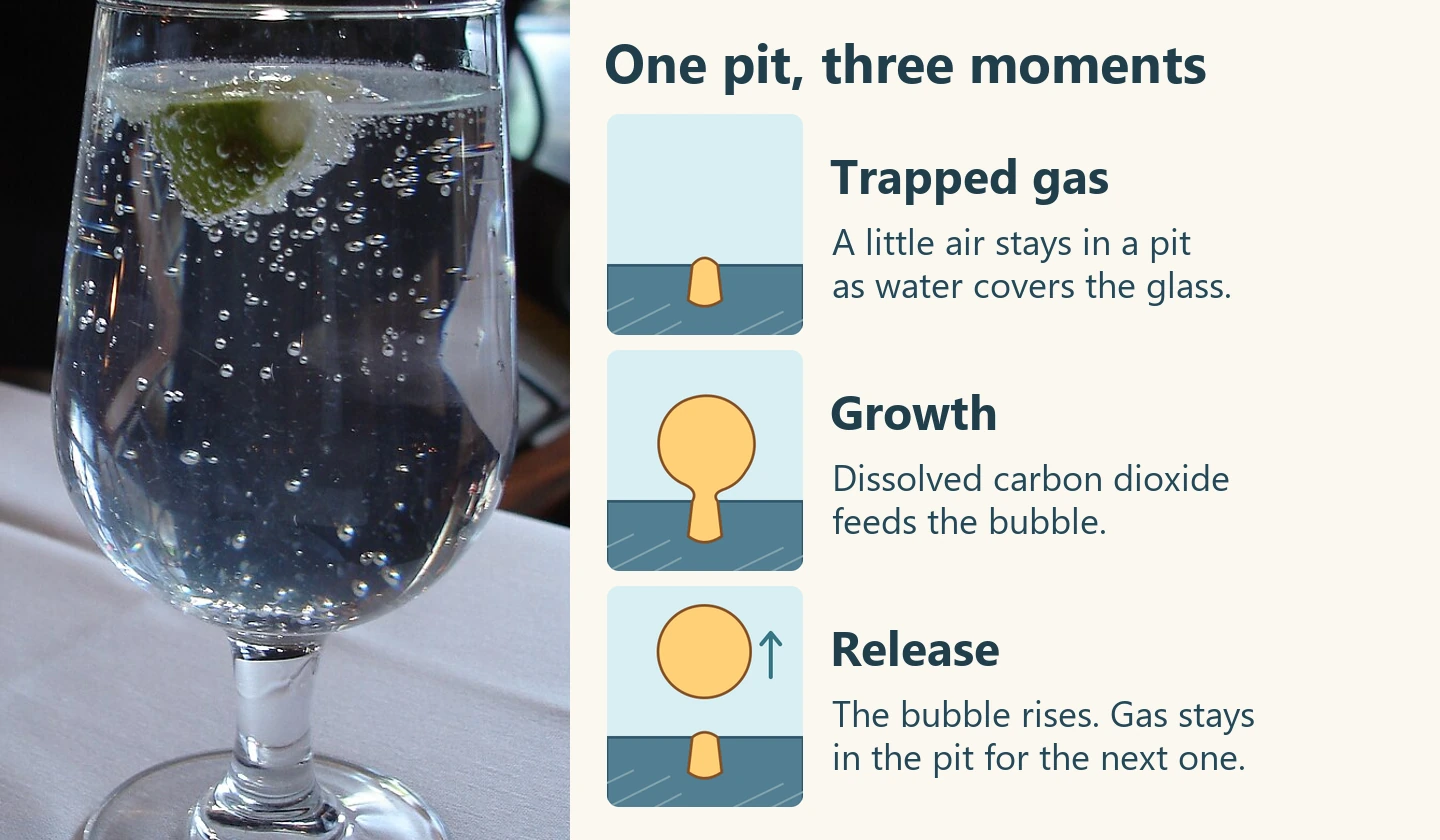
A stream of bubbles in sparkling water can start at a tiny pocket of gas trapped in a pit in the glass or inside a hollow fiber stuck to it. Carbon dioxide dissolved in the water feeds the pocket, and a bubble swells out of the opening. As the bubble grows, the upward force of buoyancy overcomes the pull of surface tension holding it there. The bubble breaks free. A little gas stays behind, giving the next bubble the same place to start.123
Follow one bubble back to the glass
In the photograph, look at the glass with the lime. The bright little beads below the fruit are bubbles in the sparkling water.5 You can catch them in motion in your own glass. Pick one stream rising from the bottom and follow it with your eyes all the way down. One bubble lifts off. Keep watching that spot. A second bubble swells right where the first one sat.
What could still be there when the spot looks empty? Picture a tiny pit in the glass. When you pour the water, a little air can stay trapped inside. Now picture a spot beside it where the glass is completely wet. For a bubble to start there from scratch, it would first have to survive as a tiny speck of gas. Surface tension squeezes a speck that small so tightly that the gas dissolves again. The pit gives the bubble a head start. Gas and water already meet across its opening, which can be wide enough for the pocket to grow.14
There’s another place gas can hide. Researchers filming champagne through a microscope saw bubbles form at hollow fibers stuck to the glass. A fiber can trap gas inside it much as a pit can. A stream tells you where to look. To tell which sort of hiding place you’ve found, you’d need a closer view.24
What fills the bubble?
A tiny pocket of air hardly seems enough to fill a whole string of bubbles. Think back to the sealed bottle. The carbon dioxide under pressure above the water lets a large amount of that gas stay dissolved in the water. Open the bottle and pour. The water now holds more dissolved carbon dioxide than it can keep in balance with the air above your glass.14
Back at the pit, carbon dioxide molecules moving through the water cross into the pocket. More enter than leave. As gas collects, it takes up more room. A bead bulges out into the water, still joined to the gas in the pit by a narrow neck.13
What finally pulls it free?
At first the bead stays put. Surface tension pulls around the narrow opening and holds the bead there. As the bead swells, it pushes more water aside. That displaced water weighs much more than the gas in the bead, so the growing bubble feels a stronger upward lift. That’s buoyancy. The attachment is still narrow. Eventually the lift overcomes the hold at the opening. The neck pinches off and the bubble rises.3
Keep your eye on the spot it left. The round part has gone, but a little gas is still tucked inside the pit. More carbon dioxide can enter that pocket, and the next bead swells at the very same opening. Leave the glass on the table and the pauses can grow longer. Eventually there’s too little dissolved carbon dioxide left to grow another bubble at that spot.134