
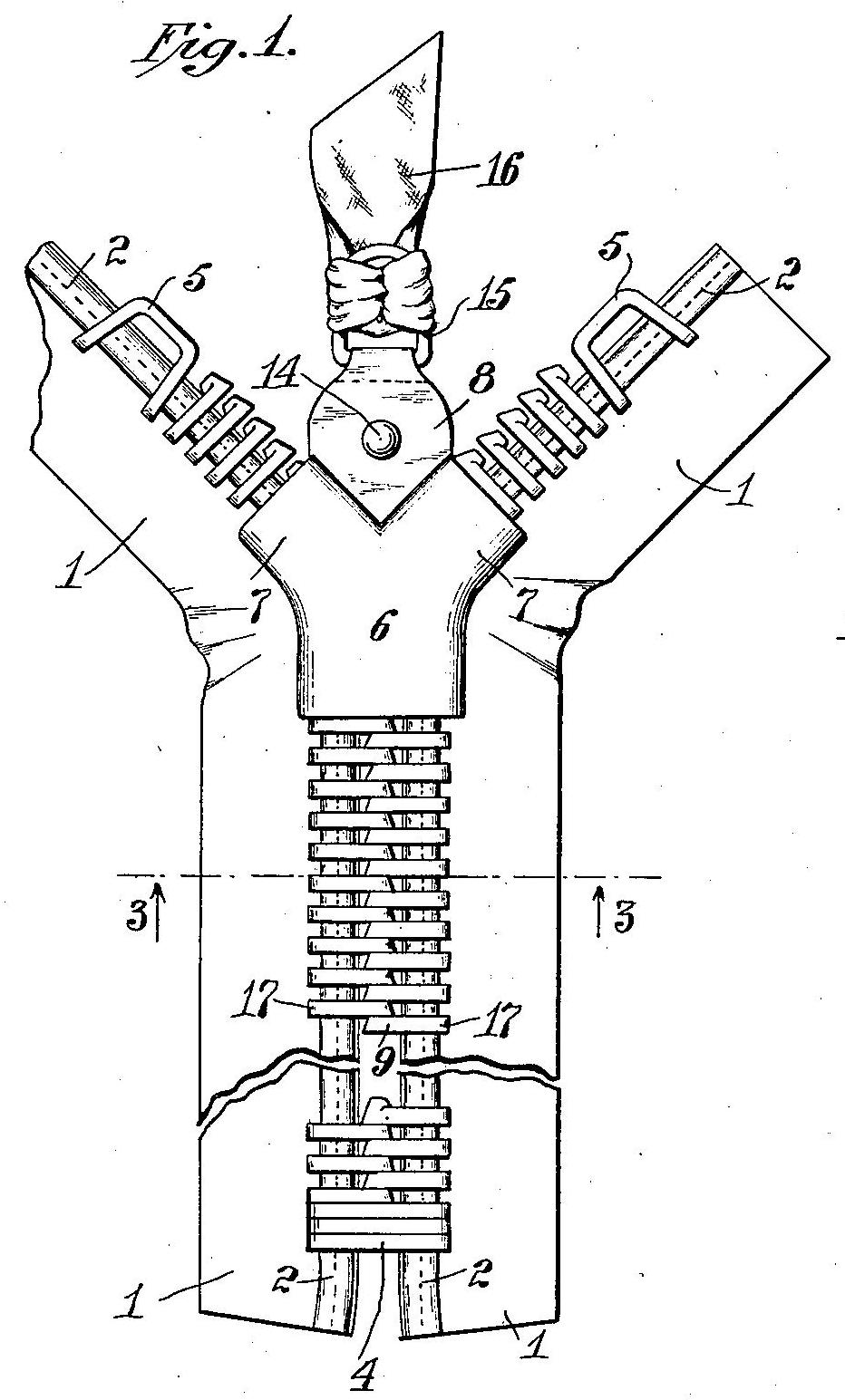
A zipper’s slider guides the teeth together, and the teeth hold each other in place. On some metal coat zippers, a bump on one tooth fits into a hollow in its neighbor across the zipper. Pull the slider back down and the divider inside its Y-shaped channel guides the rows apart, freeing the teeth in turn.123
Two rows go in. One chain comes out.
On a half-zipped coat, find the cloth strips that carry the teeth. Those strips are the zipper tape. The piece that moves when you pull the tab is the slider. Above it, the teeth sit in separate rows. Below it, they’ve joined into a single chain.1
Pick a tooth just above the slider and the nearest tooth across from it. One sits a little higher than the other. Pull up a little and watch where the rows meet. Each tooth enters a different branch of the slider’s Y-shaped channel. The walls guide the rows inward, so the teeth fit into the gaps between their neighbors and come out through the same narrow opening.12
What holds after the slider moves on?
Stop and look at those same two teeth below the slider. In this style of metal zipper, a rounded bump on one tooth has slipped into a matching hollow in its neighbor from the other row. Tug the coat edges gently sideways. The bump presses against the wall of the hollow, so the teeth resist coming apart. The same fit holds all the way down the joined chain.23
Now pull the slider down just enough to pass those teeth again. This time the joined chain enters the narrow end first. At the fork, the divider sends the two rows off at different angles, guiding each bump out of its hollow as the teeth reach the fork. Stop and look again. Those two teeth are back in separate rows, and the chain below the slider is still joined.12
Why the coat comes apart at the hem
When the slider reaches the little box at the hem of a separating coat zipper, you can slide the pin out and take the two sides completely apart. To start again, feed the pin through the slider and seat it all the way in the box. That lines up the first teeth. On a closed-end zipper, a bottom stop keeps the two sides joined even when you unzip all the way.4
The bump and hollow are features of the separate metal teeth in this example. On a coil zipper, the parts that mesh are formed from a continuous coil. The slider still guides the two sides together or apart.5