
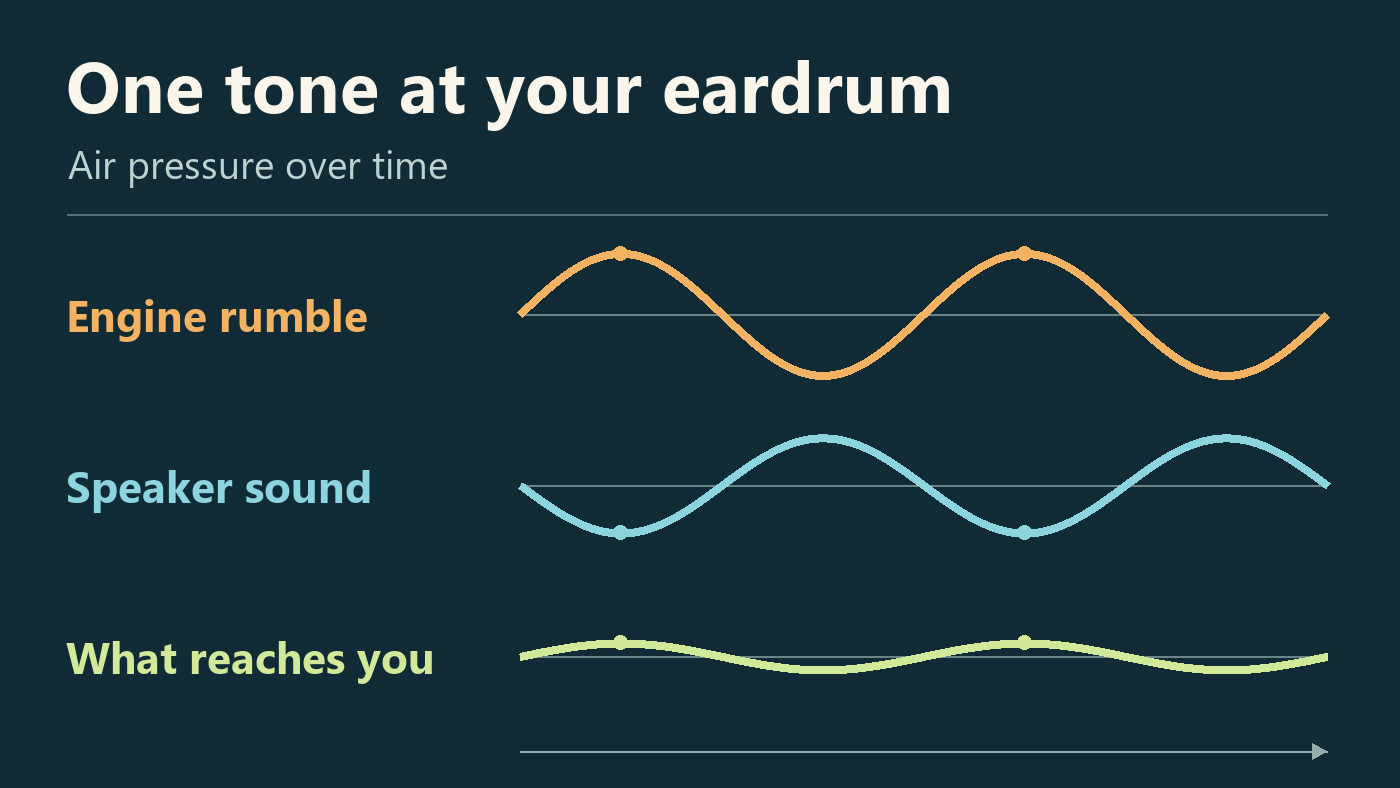
Noise-cancelling headphones play a second sound that offsets some of the noise reaching your eardrum. A microphone picks up the rumble. The speaker makes the air pressure dip at your ear as the engine sound makes it rise, and rise as the engine sound makes it dip. This works especially well for a steady low hum. A nearby voice spans a wider mix of frequencies, so you may still hear the words.234
What changes before you touch the switch?
Take a seat over the back wheels of a bus and slip on a pair of over-ear headphones. Leave them switched off. The cups and cushions already muffle some of the sounds around you, especially the higher ones. That's passive isolation. The cushion seals against your head, and a gap in that seal lets more sound through.1
Now listen for the low engine note. Leave the cups where they are and turn on noise cancellation. The seal is the same. Your music is still paused. Yet the rumble can fade further. For that, the headphones need a microphone and a speaker.124
Follow one pulse of the rumble
That engine note reaches you as tiny rises and falls in air pressure. In headphones with an outward-facing microphone, the mic picks up that pattern outside the cup. The electronics use its signal to control how strongly the little speaker inside the cup moves, and when.23
Follow one rise in pressure to your eardrum. Just as it arrives, the speaker's sound makes the pressure there dip. Half a cycle later, the engine sound dips and the speaker sound rises. Your eardrum responds to the two changes added together. A rise plus a slightly smaller dip leaves a small rise. Keep that up, cycle after cycle, and you hear a softer rumble. Physicists call this destructive interference.23
The person beside you still hears the engine. The timing is set for the short trip from the speaker to your ear. Even shifting a cushion can change how much outside sound leaks in and how the speaker's sound reaches your eardrum.123
Why can you still hear “Is this seat taken?”
A low engine note gives the speaker some leeway. Even if its dip arrives a little late, it can still overlap much of the engine's rise. At a higher pitch, the pressure swings back and forth faster. The same tiny delay can put the dip well past the rise it was meant to soften.23
Now listen to the person in the next seat. A voice contains low and high sounds, and the mix changes as one syllable gives way to the next. The headphones can soften parts of the voice along with the engine. Enough of the higher sounds may still get through the cushions and the cancellation for you to make out the question.14
In a lab test, researchers played recorded bus noise and measured what got through two models of in-ear headphones. With cancellation on, both pairs reduced the low frequencies more than they reduced the noise averaged across the wider range they tested. What you hear on your own bus still depends on the sound and the fit. You might catch enough to answer, “Go ahead.”245