Our sixty-minute hour comes from an ancient way of working with fractions. Babylonian scribes calculated in base sixty, and Greek astronomers took up the practice. Divide an hour into sixty equal parts and each part is one minute. People used minutes in astronomical calendars centuries before clockmakers put all sixty where anyone could read them on a dial.1234
What do three and twenty have to do with time?
Imagine three people sharing one hour equally. Each gets twenty minutes. Now go back about four thousand years. On a clay tablet from ancient Mesopotamia, a scribe paired three with twenty. The tablet also pairs two with thirty and four with fifteen. Sound familiar?1
The scribe was doing arithmetic. Picture a whole divided into sixty equal pieces. Twenty pieces make a third, thirty make a half, and fifteen make a quarter. Those tidy shares are one advantage of working in base sixty. The tablet shows how people used the system. Why they first settled on sixty is still an open question. The minute hand came much later.12
How do you use a minute without a clock hand?
Suppose you want to write down where a star is. A full turn takes you through 360 degrees. What if you need a finer measurement? Greek astronomers borrowed Babylonian ways of calculating. Writing around the year 150, the astronomer Ptolemy divided a degree into sixty equal parts. Each part could be divided by sixty again. We still call those units minutes and seconds of angle.2
Now start with an hour instead of a degree. Divide it by sixty and you get a minute of time. Divide that minute by sixty and you get a second. The arithmetic is the same. What changes is the thing you’re measuring.2
Take an English astronomical calendar for 1420. Two lines give the length of daylight in hours and minutes. If you wanted to know how long the Sun would be up, you could look it up in the calendar. You didn’t need a clock that could show every minute to make use of the answer.3
When could someone glance up and read the minute?
For centuries, a clock in Europe might mark the half hour or the quarter hour. You could tell when it was quarter past. But how would you tell fifteen minutes past from sixteen? By the late 1500s, some mechanical clocks were displaying individual minutes. Now you could read the difference on the dial.2
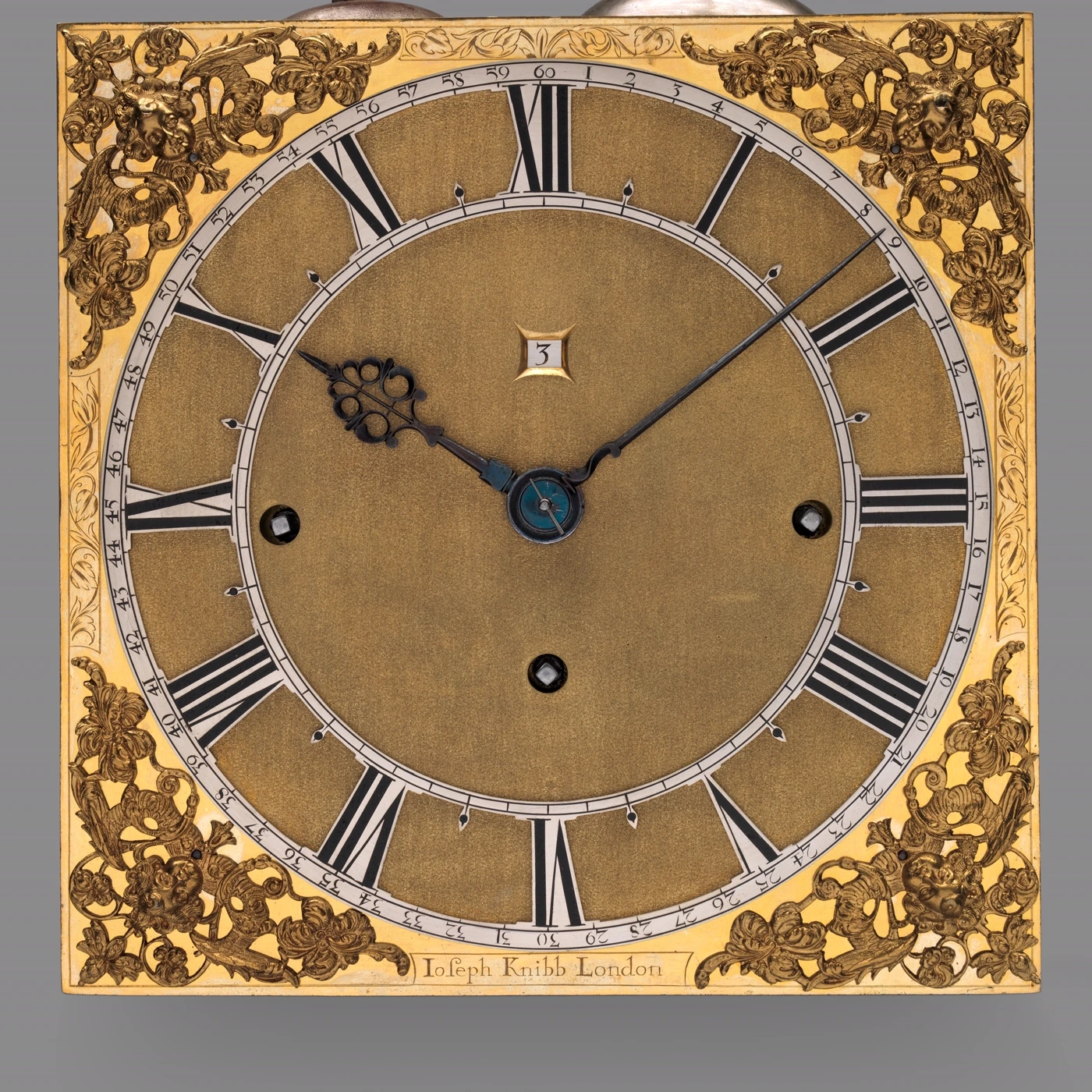
Look at the clock Joseph Knibb made in London around 1680 to 1685. Big Roman numerals show the hours. Just outside them runs a narrow ring numbered all the way from one to sixty. Find the Roman three. Beside it on the rim is fifteen, and one mark farther on is sixteen. That quarter hour we worked out as fifteen sixtieths? On Knibb’s clock, you can read it at the tip of the long hand.4