
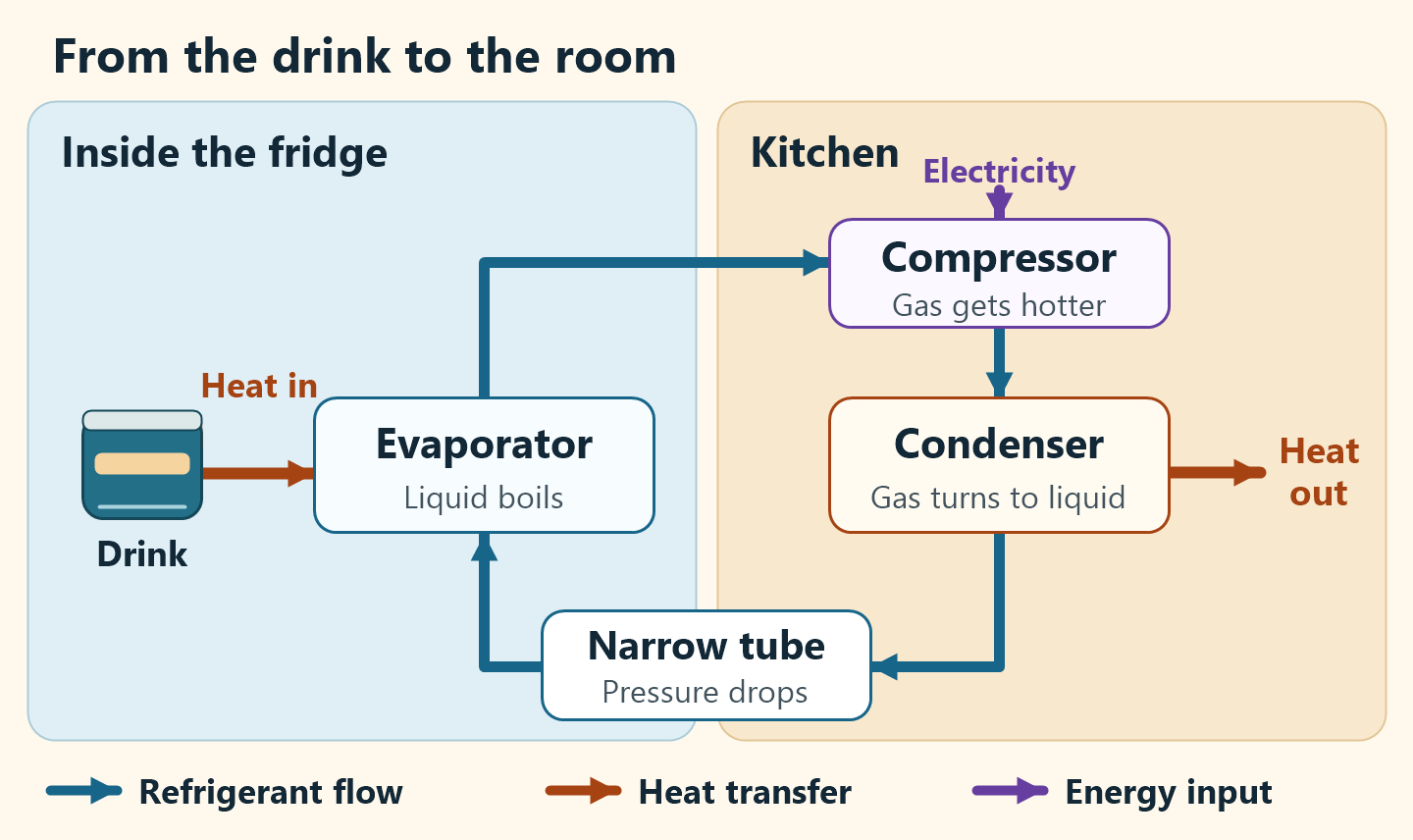
Some of the warmth Asher feels near the fridge came from inside it. A fluid called refrigerant picks up heat at a cold coil inside the fridge. An electric compressor squeezes the refrigerant gas, making it hotter than the room. At an outside coil, the refrigerant gives up heat to the kitchen air. The room gets the heat removed from inside, plus the energy it took to run the compressor.123
Where does the drink’s heat go first?
I feel warm air near the fridge while it’s running. A little earlier, I put a room-temperature drink inside. Now my drink is cooling down. Could some of the warmth I feel out here have come from that can?23
Start at the can. Heat moves from the drink through the can’s thin wall into the cooler air around it. The air gives up heat to an even colder coil called the evaporator, which may be hidden behind a panel. Inside that coil is a fluid called refrigerant. As it takes in heat, the liquid refrigerant boils into a gas. That’s where heat from the drink enters the sealed loop.13
How can heat move into a warmer room?
Heat flows from warmer things to cooler ones. The kitchen is warmer than the air inside the fridge. So how does the fridge move heat in that direction? The trick is to make the refrigerant hotter than the kitchen.123
Electricity powers the motor that drives the compressor. The compressor draws gas from the cold coil and squeezes it. Doing that takes work, and it raises the gas’s pressure and temperature. By the time the gas leaves the compressor, it’s hotter than the kitchen air.123
Where does the heat leave?
The hot gas flows through the outside coil, called the condenser. Now the kitchen air is the cooler thing. Heat passes from the refrigerant through the coil into that air. As the refrigerant gives up heat, it turns back into a liquid. That’s where the heat we’ve been following from my drink leaves the loop. The warm air I feel carries heat removed from inside the fridge, along with energy the compressor added.123
How does the refrigerant get cold again?
On its way back, the liquid passes through a narrow tube. Its pressure drops, and at that lower pressure it can boil at a much lower temperature. Some of the liquid boils as the pressure falls, cooling the mixture. The cold mixture reaches the evaporator again, where the remaining liquid can pick up more heat and boil.14
Come back to the two spots Asher can check. Inside, the drink is cooler because it gave up heat. Outside, the air near the fridge is warmer because the fridge released that heat into the kitchen. The refrigerant is already on its way around again.123