
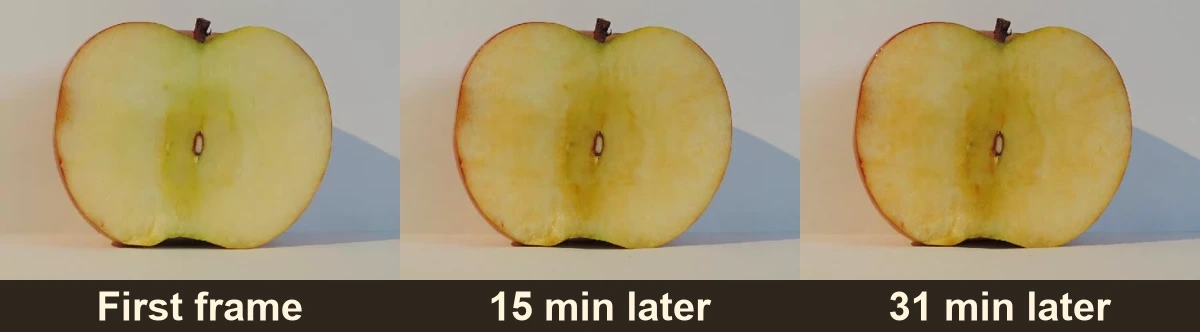
Cutting an apple breaks open cells at the surface. An enzyme meets compounds the cells normally keep apart from it. With oxygen from the air, the enzyme starts a reaction that makes brown pigments. The undamaged flesh of a whole apple stays pale because its cells still keep the ingredients apart. Lemon juice can delay browning. Its acidity can slow the enzyme, and its vitamin C can temporarily reverse an early step before brown pigment forms.12345679
What changes at the cut?
Set a fresh slice beside a whole apple. The cut face still looks pale. But the knife has already torn through cells just beneath that surface. Inside undamaged cells, membranes keep an enzyme called polyphenol oxidase apart from many of the compounds it can change.12
One of those compounds is chlorogenic acid. It’s a substrate, the material the enzyme acts on. The knife lets enzyme and substrate mix at the same spot where oxygen from the air can easily reach them. Beneath the whole apple’s intact skin, undamaged cells still keep the enzyme and substrate apart.12
Where does the brown color come from?
Come back to that slice and look for tan patches on the cut face. The enzyme uses oxygen to turn chlorogenic acid and other compounds into molecules called quinones. Those molecules react further to form brown pigments. The reaction can be underway while the slice still looks pale. The color shows as enough pigment builds up.2
What does lemon juice change?
Now squeeze a little lemon juice over a second slice. The citric acid in the juice makes the cut surface more acidic, which can slow the enzyme. The juice also contains vitamin C. It can turn newly formed quinones back into their earlier form before they help make brown pigment. As the vitamin C is used up, the slice can darken again.34579
In a student experiment with Granny Smith slices, the stronger lemon juice mixtures left less browned area after a day. The students used whole lemon juice, so the result leaves open how much the acidity and the vitamin C each contributed.6
A separate study measured both color and enzyme activity in Golden Delicious and Elstar slices. A vitamin C dip slowed early discoloration. Briefly heating slices in hotter water reduced measured enzyme activity, yet the surface could still change color. Color alone gives you only part of the picture.7