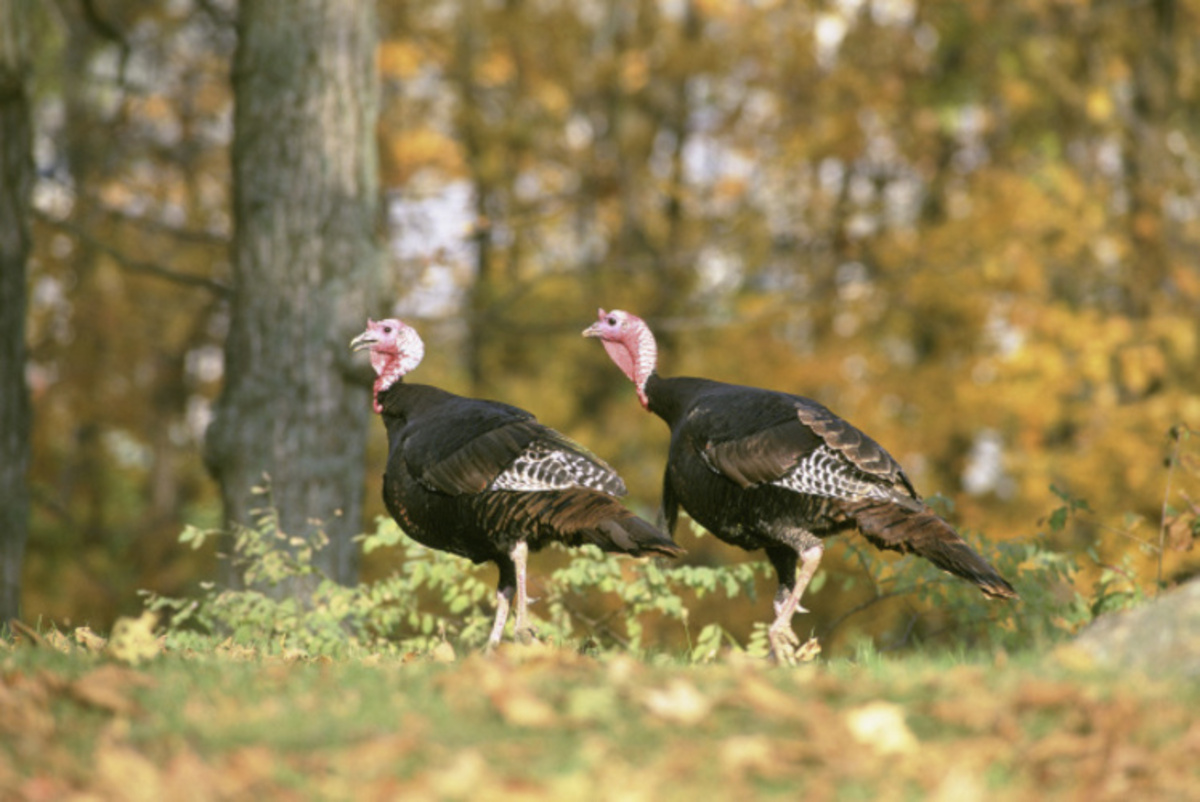
Turkey leg meat is dark because it contains more myoglobin, a red protein that holds oxygen inside muscle cells. A turkey’s legs use that oxygen to keep working step after step. Its breast muscles power brief flaps, rely less on stored oxygen, and contain less of the pigment. That’s why breast meat from the same bird looks lighter.123
What does it take to keep walking?
Picture that turkey halfway across the clearing. Its wings are still tucked in. Its legs have already carried it a few dozen steps. What does it take to lift one foot and take the next one?
Each time a leg muscle contracts, it uses ATP, a molecule that supplies energy for the movement. A muscle keeps only a little ATP on hand, so it has to replenish it as the bird walks. Inside each muscle cell are tiny structures called mitochondria. They use oxygen to draw energy from fuel such as sugar and make more ATP. That keeps the muscle ready for another step.24
Where does the red come from?
Follow the oxygen. Red blood cells bring it to tiny vessels called capillaries that run alongside the leg muscle. From there, oxygen passes into a muscle fiber, which is a single long cell. Inside the fiber, a protein called myoglobin can hold some of that oxygen in reserve and release it as the muscle uses up its supply.134
Myoglobin has an iron-containing part that gives the protein its red color. The iron is also where oxygen attaches. A turkey’s walking muscles contain plenty of myoglobin, so those fibers have both an oxygen reserve and a deeper color. When you carve a roasted thigh, you can still see the effect of all that pigment. Heat changes myoglobin’s shape, which helps explain why the meat on your plate often looks brown.135
What changes when the wings open?
Now picture the same turkey beating its wings. Its big breast muscles can deliver a quick burst of power. Their fast fibers can rapidly break down sugar to replenish ATP without using oxygen for that step. That suits a brief flurry of wingbeats. The breast relies less on a ready reserve of oxygen than the walking muscles do, so it contains less myoglobin. That’s why a slice of breast looks pale beside the thigh.124
Look closer at the thigh and there’s one more surprise. Researchers stained muscle fibers from domestic turkeys and examined them under a microscope. They found mostly fast fibers in the main breast muscle. In one dark thigh muscle, they found a mix of fast and slow fibers. The color you see belongs to the whole cut. Even within that one thigh muscle, different fibers can do different jobs.2