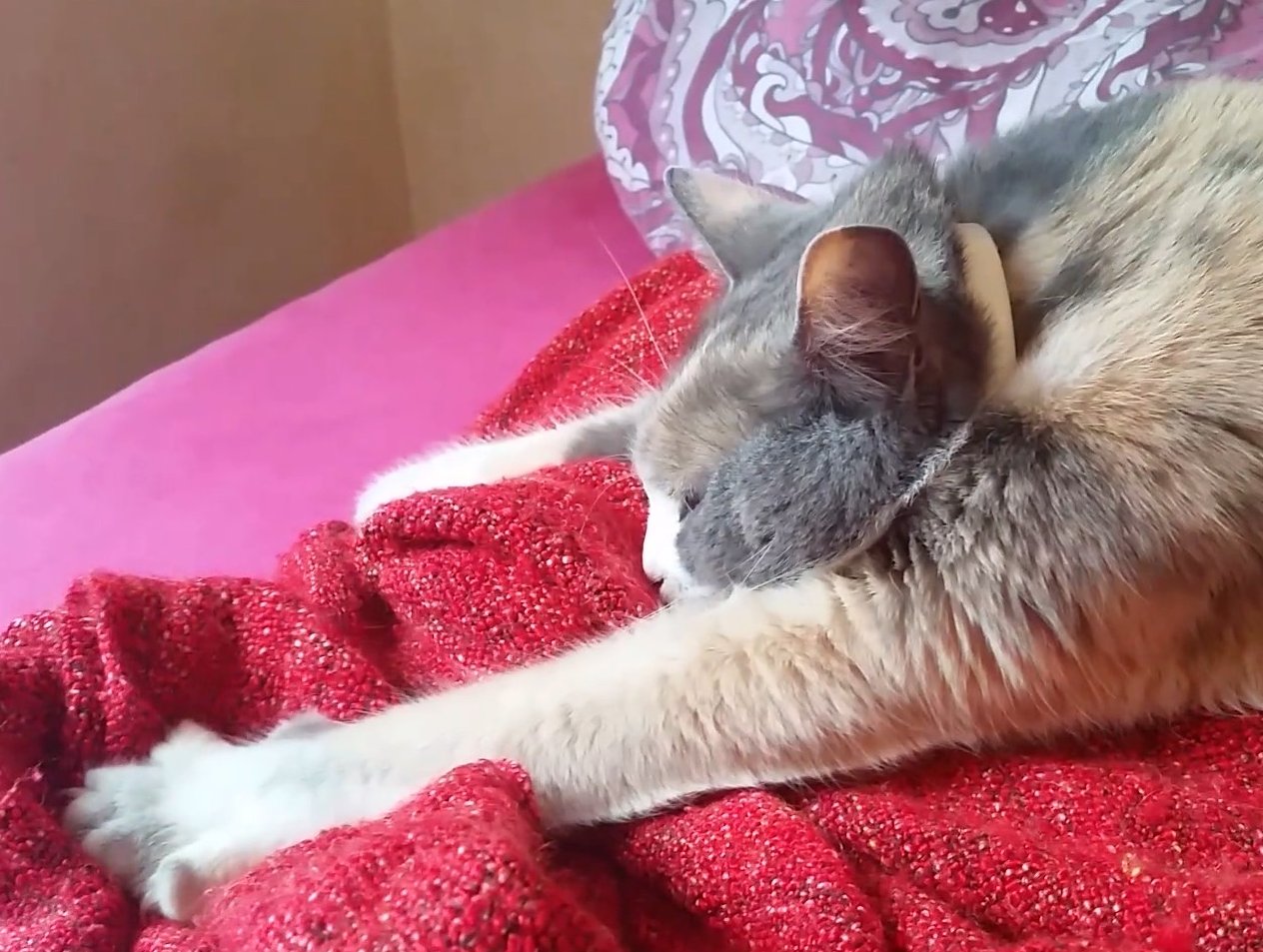

Kittens knead around their mother’s nipple as they nurse, helping the milk flow. Some cats keep the same alternating paw movement after weaning. On a blanket or lap, a soft surface may trigger the familiar motion, and kneading may feel comforting. The paw movements alone can’t tell us what a particular cat feels.123
When do a kitten’s paws join in?
A newborn kitten searches for a meal by sweeping its head from side to side. Once it finds a teat and latches on, its mouth and paws work together. As the kitten suckles, it presses its front paws into its mother’s belly around the teat. Researchers call this “milk treading.” The pressure helps the milk flow.12
What carries over after a kitten stops nursing?
A grown cat can press one front paw and then the other against your lap. You might feel a tug on your jeans as a claw catches the fabric on its way up. That’s the rhythm people call “making biscuits.” Researchers who catalogued cat behavior describe it as a movement from kittenhood that some adults still use, even on a person.23
You can see the connection in a video Tilman Piesk took of an adult cat kneading a wool blanket. Watch her mouth just after the three-minute mark. She’s sucking the wool as her paws work. A blanket can’t give her milk, yet two parts of the nursing routine still fit together. That tells us what carried over. It leaves open why she does it.14
What starts the paws moving on your lap?
Picture a fleece throw across your knees. Your cat steps onto it and begins to knead. What set off that first press? Cats Protection suggests that soft fabric against the paw pads might prompt the familiar nursing movement. Why keep going? One possibility is that the rhythm still carries some of the comfort of feeding. A soft surface could start the paws moving, and the movement itself could feel good.2
Suppose you slide the fleece onto the next cushion and the cat follows it, kneading again. Now you know your knees were optional. The move still leaves both explanations in play. The fleece feels the same in both spots, and either one gives the cat somewhere to settle and knead. Watching the paws tells you more about the habit’s history than it does about the cat’s feelings.23