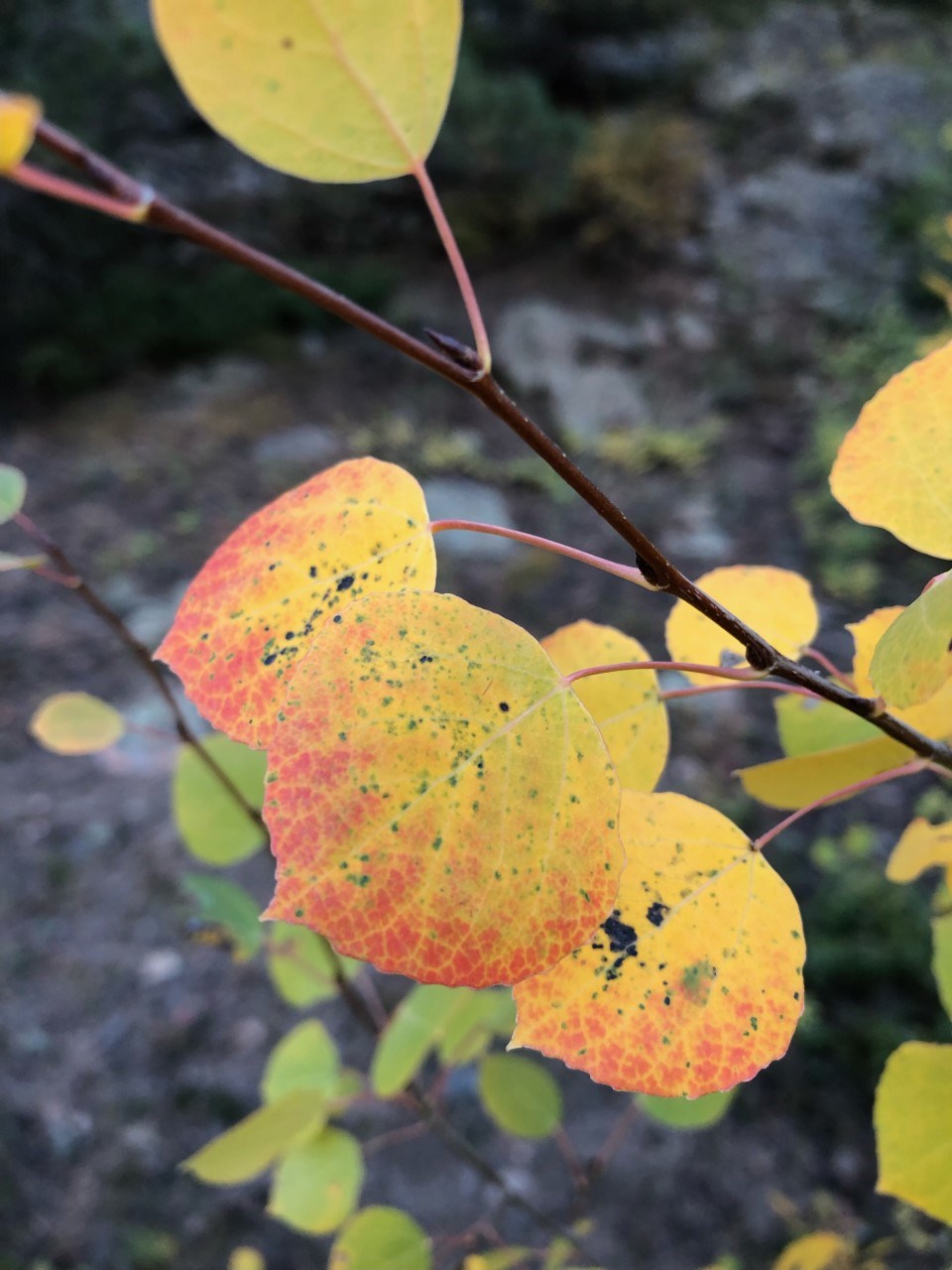
Before a tree sheds its leaves for winter, it takes back nutrients it can use next spring. As a leaf winds down, it makes less chlorophyll, the green pigment that helps it capture sunlight. Existing chlorophyll breaks down, and yellow or orange pigments that were there all summer show through. Some leaves also make new red or purple pigments. In red-osier dogwood, those pigments can shield the leaf from excess sunlight while it is still alive.1234
What happens inside a leaf before it falls?
Picture an aspen leaf in July. It uses sunlight to make sugars that feed the tree. A green pigment called chlorophyll helps it catch that light. Chlorophyll absorbs much of the red and blue light that hits the leaf. More green light returns to your eyes, so green is the color you see.12
As the days shorten, the aspen gets a cue to prepare for winter. Its broad leaves lose water to the air. Shedding them helps the tree conserve water through the cold months. But a fallen leaf would take its nutrients with it. While the leaf is still attached and alive, the tree starts taking apart the equipment it uses to capture sunlight. It moves nutrients such as nitrogen out of the leaf and can use them to grow new leaves next spring.1345
That dismantling changes the color. The leaf makes less chlorophyll and breaks down the chlorophyll it already has. Yellow and orange pigments called carotenoids also helped the leaf catch light in July. Some of them last longer than chlorophyll. By October, enough green can be gone for those same pigments to give the aspen leaf its gold color.124
Where does the red come from?
A leaf can still make something new in the weeks before it falls. Sunny days and cool nights can leave sugars concentrated in the leaf. In trees such as sugar maples, those conditions favor the production of anthocyanins. These pigments can give a leaf anything from a red blush to a deep purple.12
Even on the same shrub, how much sun a leaf gets can matter. Researchers studying five red-osier dogwood shrubs in Massachusetts found reddish-purple leaves in direct sun and pale yellow-green ones in the shade. When they removed branches shading some of the leaves, the newly exposed leaves began making red pigment too.3
Why make red pigment in a leaf that is about to fall?
A leaf that is taking apart its light-catching equipment can still be sitting in full sun. The dogwood researchers found a clue to how the leaf handles that mismatch. Its red pigment usually formed near the upper surface. When they turned leaves over, the pigment formed near the underside instead. In either position, sunlight had to pass through the red layer before it reached the tissue beneath.3
The team tested how well that tissue coped with bright light. They shone white light on the tops of red and yellow leaves for half an hour, switched it off, then measured how well the leaves could use light again. In the red leaves, the part of the light-catching system they measured recovered in about eighty minutes. In the yellow leaves, it was still below its starting level six hours later.3
For these dogwoods, making red pigment gave the sunlit leaves a filter while they wound down. The shrubs reclaimed about the same share of nitrogen from the red leaves as from the yellow ones. The experiment shows what a red pigment can do in this shrub. Whether it serves the same purpose in every tree that turns red is still an open question.3