
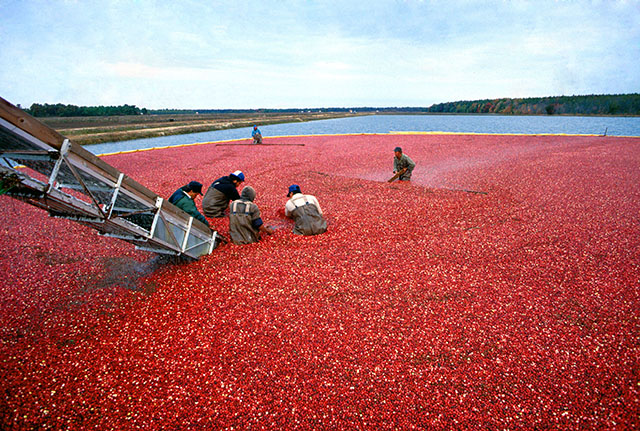
No. Cranberries grow on low vines rooted in moist, well-drained soil. At wet harvest, growers flood the bed and loosen the ripe berries. Air pockets inside the fruit make the berries float where workers can gather them. Dry-picked berries usually go to the fresh market.123
Where is the berry before the flood?
Picture that red pond at harvest. Where would you look for the vines? Try straight down. Before the flood, you’d see a mat of low vines rooted in soil. Look closely and you’ll find the berries on short shoots just above the ground.1
Growers call this bed a bog or a marsh. The soil needs moisture, and excess water needs somewhere to drain. While the berries develop, they hang in the open air.1
How does a whole bed turn red?
Once the berries are ripe, growers can flood the bed for a wet harvest. A spinning reel churns the shallow water and knocks the berries loose. Air pockets make each berry lighter than the same volume of water. Once it comes free, it rises. Thousands of berries do that across the bed, turning the surface red.12
Workers sweep the floating berries together with barriers that float, too. Now a pump or conveyor can lift the berries from one spot into a truck. Wet-picked berries usually go to processors, who turn them into cranberry sauce, juice, or sweetened dried cranberries.123
What if the grower skips the flood?
When growers pick without flooding, a machine with teeth combs through the vines and catches the berries as they come loose. The fruit goes into bags or bins, then gets sorted and packed for sale. That’s the usual route for the fresh cranberries you buy by the bag.123
Why take the dry route for fresh fruit? UMass Extension points to a storage problem. Fungal spores in the harvest water can infect berries, making them more likely to rot in storage. Wet-picked berries can go to processors instead.35
What does water do the rest of the year?
Sprinklers give the vines water in dry weather and can protect tender buds in spring or ripening berries in fall from frost. In cold regions, growers may also flood the beds in winter to shield dormant vines from cold and drying winds.14
That red pond is the moment water carries the crop. The rest of the season, growers manage it so the vines can grow and come back next year.14